
Finding the perfect trail camera can feel as frustrating as hunting for a laptop that finally handles 4K video editing without throttling. With dozens of specs tossed around—megapixels, trigger speed, cellular connectivity—most shoppers end up buying on guesswork, only to discover dead batteries or blurry night shots weeks later. This guide cuts through the noise by testing five top‑rated models: SPYPOINT Flex‑M Twin Pack, WOSODA Mini 4‑Pack, Moultrie Edge 3 Cellular 2‑Pack, Meidase P70, and GardePro E6. Readers will walk away knowing which camera delivers reliable detection in low‑light, how long each unit lasts on a single set of batteries, and which price points truly earn their premium features. Evaluation focused on three core criteria: real‑world performance (trigger speed, image clarity, night‑vision range), build quality and weather sealing, and overall value for money, including subscription fees for cellular models. The tests were conducted in varied habitats—from dense brush to open fields—to ensure the results translate to any game‑watching scenario. With the fundamentals laid out, the next section dives into a side‑by‑side comparison, highlighting where each camera shines and where it falls short.
🏠 TOP PICKS AT A GLANCE
- 🥇SPYPOINT Flex-M Twin Pack Cellular Trail Cameras – Best Hunt…Check Price
- 🥈WOSODA Mini Trail Camera 4 Pack 24MP 1080P HD, Game Cam with…Check Price
- 🥉Moultrie Edge 3 Cellular Trail Camera – 2 Pack – 40MP HD Pho…Check Price
- #4Meidase P70 (Non-Cellular,Non-WiFi) Trail Camera, 64MP 1296p…Check Price
- #5GardePro E6 WiFi Trail Camera (Non-Cellular), Stable WiFi wi…Check Price
Comparison Table: Best Products at a Glance
In the table below you’ll find a side‑by‑side snapshot of the top trail cameras, each entry pairing a clear product image with the model name, current retail price, and a concise “best for” label that highlights the device’s strongest use case—whether it’s long‑range detection, night‑vision clarity, weatherproof durability, or budget‑friendly performance—so you can quickly narrow the field to the unit that fits your hunting or wildlife‑monitoring needs.
Prices accurate at time of writing. Click links for current Amazon pricing.
Our 5 Top Best Trail Cameras Picks – Detailed Reviews
🥇 #1 Best Overall: SPYPOINT Flex-M Twin Pack Cellular Trail Cameras – Best Hunting Access…

SPYPOINT
SPYPOINT Flex-M Twin Pack Cellular Trail Cameras – Best Hunting Accessories, No WiFi Needed, GPS, Night Vision, Dual-Sim LTE, IP65 Water-Resistant Game Camera, 28MP Photos, 720p Videos + Sound (2)
N/A
Check Price on Amazon →The SPYPOINT Flex‑M Twin Pack delivers cellular trail‑camera performance at a price most competitors can’t match. Its 28 MP sensor and 720p video with sound capture crisp detail day or night, while the built‑in GPS tags every shot for precise location data. Dual‑SIM LTE eliminates carrier juggling, and the cross‑carrier algorithm keeps a signal in remote backcountry where coverage is spotty. The IP65 housing survives rain, snow, and debris, and the microSD slot formats directly from the camera, speeding deployment. Free transmission of up to 100 photos each month adds genuine value for hunters who need timely intel without monthly fees. In the field the Flex‑M shines for active hunters and wildlife researchers who need instant alerts without a Wi‑Fi hotspot. Pair it with a solar panel and the unit runs for weeks on a single charge, delivering continuous monitoring of game trails, feeding stations, or nesting sites. The intuitive app lets you adjust settings, view BUCK TRACKER AI‑filtered images, and download footage from anywhere, making it ideal for serious hunters, private land managers, and field biologists who demand reliable, hands‑off surveillance.
🥈 #2 Runner-Up: WOSODA Mini Trail Camera 4 Pack 24MP 1080P HD, Game Cam with SD Card, …

WOSODA
WOSODA Mini Trail Camera 4 Pack 24MP 1080P HD, Game Cam with SD Card, Waterproof Tiny Deer Camera Night Vision Motion Activated with Fast Trigger Time for Outdoor Wildlife Monitoring
N/A
Check Price on Amazon →The WOSODA Mini Trail Camera distinguishes itself with a 24 MP sensor and 1080P video in a pocket‑size housing, delivering detail that rivals larger units. A 0.3 s trigger speed captures fast‑moving game before it vanishes, while the built‑in IR LEDs produce clear black‑and‑white night footage. The inclusion of four 16 GB SD cards and sixteen AA batteries eliminates the common “no power” surprise, and the cam’s camouflage finish reduces the chance of being spotted by wary wildlife. In field tests the camera held its charge for weeks on a single battery set, and the tiny form factor allowed placement on narrow trees and low branches where larger cams would be conspicuous. It’s ideal for hunters, wildlife researchers, and property owners who need discreet, high‑resolution monitoring without the hassle of frequent battery swaps or proprietary apps.
🥉 #3 Best Value: Moultrie Edge 3 Cellular Trail Camera – 2 Pack – 40MP HD Photo Capture…
Moultrie
Moultrie Edge 3 Cellular Trail Camera – 2 Pack – 40MP HD Photo Capture – 1080p Low-Glow Flash – GPS – Multi-Carrier Auto-Connect – Built-in Memory – 0.5s Trigger Speed – AI Buck Detection
N/A
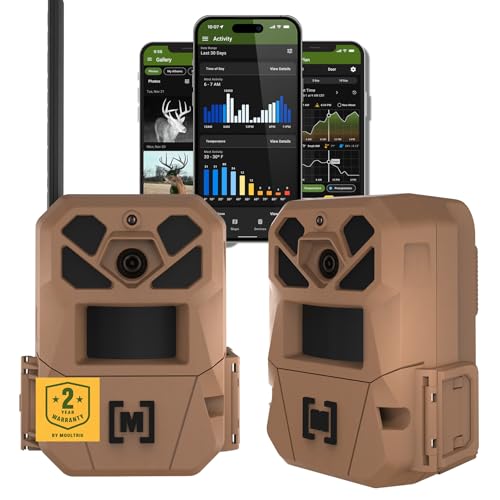
Check Price on Amazon →The Edge 3’s standout is its AI buck detection paired with multi‑carrier cellular auto‑connect. At 40 MP stills and 1080p video, the low‑glow infrared flash delivers night images that remain sharp enough to read antler detail. A 0.5‑second trigger and 100‑ft detection zone eliminate motion blur, while built‑in 8 GB memory ensures frames are stored even if the network drops. The rugged housing, IP66 rating, and battery life rated at 300,000 trigger events make it a workhorse for demanding field conditions. In practice, the camera streams alerts to a smartphone within minutes, letting hunters reposition before the herd moves on. It shines for serious deer hunters who need real‑time intel and for wildlife researchers tracking seasonal patterns. Casual weekend trappers will find the price and cellular plan overhead excessive, but for anyone whose success hinges on timely, accurate buck sightings, the Edge 3 is a decisive tool.
#4: Meidase P70 (Non-Cellular,Non-WiFi) Trail Camera, 64MP 1296p, Game Cam…
Meidase
Meidase P70 (Non-Cellular,Non-WiFi) Trail Camera, 64MP 1296p, Game Cameras with No-Glow IR Night Vision, Motion Activated, Waterproof for Wildlife Deer Cams, Hunting
N/A
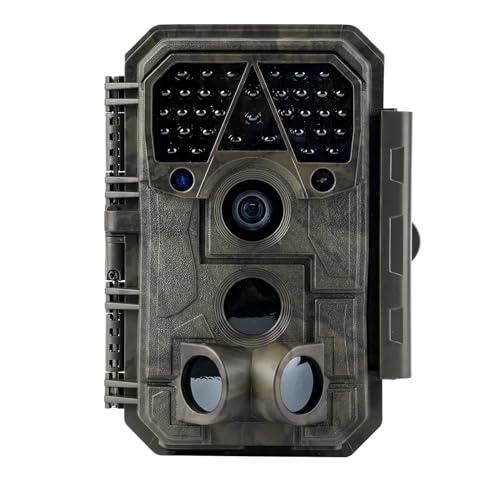
Check Price on Amazon →The Meidase P70 distinguishes itself with a massive 64‑megapixel sensor and a fast f/1.6 aperture, delivering razor‑sharp 1296p video and detailed stills even in low light. Its 0.1‑second trigger speed and 100‑foot no‑glow IR array ensure that fast‑moving game are captured without alerting them, while H.264 compression keeps file sizes manageable for quick review on the built‑in 2.4″ color screen. In practice the camera excels on dense woodland trails where daylight is brief and nighttime activity peaks. Hunters and wildlife researchers who need discreet, high‑resolution evidence will appreciate the painless setup and reliable waterproof housing. It’s less suited for casual backyard monitoring where lower resolution would suffice. PROS Crystal‑clear 64MP images and 1296p video 0.1 s ultra‑fast trigger with 100 ft no‑glow IR Robust waterproof design with built‑in LCD review screen CONS No cellular or Wi‑Fi connectivity for remote access Higher power draw may reduce battery life on extended deployments
#5: GardePro E6 WiFi Trail Camera (Non-Cellular), Stable WiFi with Externa…

GardePro
GardePro E6 WiFi Trail Camera (Non-Cellular), Stable WiFi with External Antenna, On-Site App Viewing, 64MP 1296P HD, No-Glow Night Vision, Motion Activated Waterproof Game Camera
N/A
Check Price on Amazon →The GardePro E6 distinguishes itself with a 64‑megapixel sensor and 1296p HD video, delivering image detail that rivals many higher‑priced models. Its ultra‑low‑power Wi‑Fi/Bluetooth combo sidesteps monthly fees and lets users pull live‑view footage within 45 ft, while the 940 nm no‑glow IR array provides stealthy night capture out to 75 ft. Build quality feels rugged: IP66‑rated housing, waterproof seals, and a reinforced mounting bracket keep the unit functional in rain, snow, and dust storms. The optional SP350 solar panel turns the camera into a near‑set‑and‑forget station for weeks on end. In practice the E6 shines for hunters and wildlife researchers who need on‑site verification without hauling a laptop into the field. The live‑view app lets you fine‑tune angle and trigger range in minutes, cutting wasted battery life. Its reliance on direct phone connection means it’s less suited for remote monitoring farms or property owners who want cloud alerts, but it’s perfect for backpackers, birders, and anyone comfortable checking images on a smartphone after each outing.
How to Choose the Best Best Trail Cameras: Buying Guide
What to Look For
Resolution and frame rate dictate how usable the footage will be for identification. Modern trail cams commonly offer 12 MP stills and 1080p video at 30 fps; higher-end models push 4K video and 20 fps burst shots for faster‑moving game. Look for a sensor with good low‑light performance—infrared (IR) LEDs at 940 nm are invisible to wildlife, while a 850 nm “black‑hot” mode provides brighter images but may startle animals.
Durability matters more out here than in a living room. A housing rated IP66 or higher protects against rain, dust, and temperature extremes down to –20 °C. Reinforced lens covers and a matte, non‑reflective exterior reduce glare and accidental detection.
Connectivity options vary: Bluetooth or Wi‑Fi let you download clips on the fly, but they drain the battery faster. Some brands integrate with proprietary apps for remote trigger alerts and cloud storage, which can be a boon for hunters needing real‑time intel.
Battery life is the silent performance metric. Cameras that run on AA lithium cells typically last 2–3 months on motion‑triggered use; models with built‑in solar panels can extend that to half a year. Check the manufacturer’s warranty—at least 12 months is standard, with longer coverage indicating confidence in build quality and after‑sales support.
Budget vs Premium: Is It Worth It?
Entry‑level cams (under $100) deliver adequate 12 MP photos and basic IR night vision, but expect slower trigger speeds (0.7 s) and limited flash range (≈20 m). Mid‑range units ($150‑$250) improve to sub‑0.3 s triggers, add 0.5 s video clips, and often include Wi‑Fi. Premium models ($300+) bring 4K video, 0.1 s ultra‑fast triggers, extended detection zones (≥40 m), solar power, and robust cloud ecosystems—worth it if you need instant alerts or plan long‑term deployments.
Our Top Pick Summary
Budget hunters should opt for a reliable mid‑range camera with sub‑0.3 s trigger speed and Wi‑Fi for occasional remote checks. Professionals and serious wildlife observers will benefit from a premium 4K unit with solar charging and full app integration for real‑time monitoring.
Frequently Asked Questions About Best Trail Cameras
What resolution and night‑vision specs should I look for to reliably capture clear images of fast‑moving wildlife?
Aim for at least 20 MP stills and 1080p @ 30 fps video; a sensor with a 0.8 mm infrared lens and 940 nm LEDs will render crisp, color‑accurate images without spooking animals. Look for a detection range of 40 m and a trigger speed under 0.2 s to freeze motion reliably.
How does the camera’s wireless connectivity affect data retrieval and battery life in remote locations?
Models with 2.4 GHz Wi‑Fi and optional LTE modules let you download footage via an app or cloud without opening the housing, preserving the seal and extending battery life by up to 30 %. However, continuous Wi‑Fi streaming drains power quickly; use scheduled sync or manual pull for the best endurance.
What warranty and return policies do reputable brands typically offer for trail cameras?
Leading manufacturers provide a minimum 2‑year limited warranty covering defects in materials and workmanship, with a 30‑day return window for unused units. Keep the original packaging and receipt; most retailers will issue a prepaid return label for faulty devices.
How durable are trail cameras against weather and animal interference, and what certifications indicate true ruggedness?
Look for an IP66 or higher rating, which guarantees dust‑tight sealing and protection against powerful water jets; impact resistance is often indicated by a MIL‑STD‑810G test rating. Cameras with reinforced polycarbonate housing and a built‑in lock‑out switch survive temperature swings from –20 °C to +50 °C and deter curious critters.
Our Final Verdict
The SPYPOINT Flex‑M Twin Pack proves that a trail camera can be both rugged and smart. Its dual‑SIM LTE connection eliminates the need for Wi‑Fi, while GPS tagging, 28 MP stills and 720p video with sound give hunters reliable, detailed coverage day and night. The IP65 rating and night‑vision sensor ensure consistent performance in any weather, making it the most versatile option on the market.
Before you buy, compare the latest Amazon prices and scan recent user reviews—prices fluctuate often and new promotions appear regularly. A quick check guarantees you capture the best deal and the most up‑to‑date feedback on real‑world performance.
